Targeted Lipid Nanoparticle Delivery
Our antibody platform for cell-specific LNP targeting
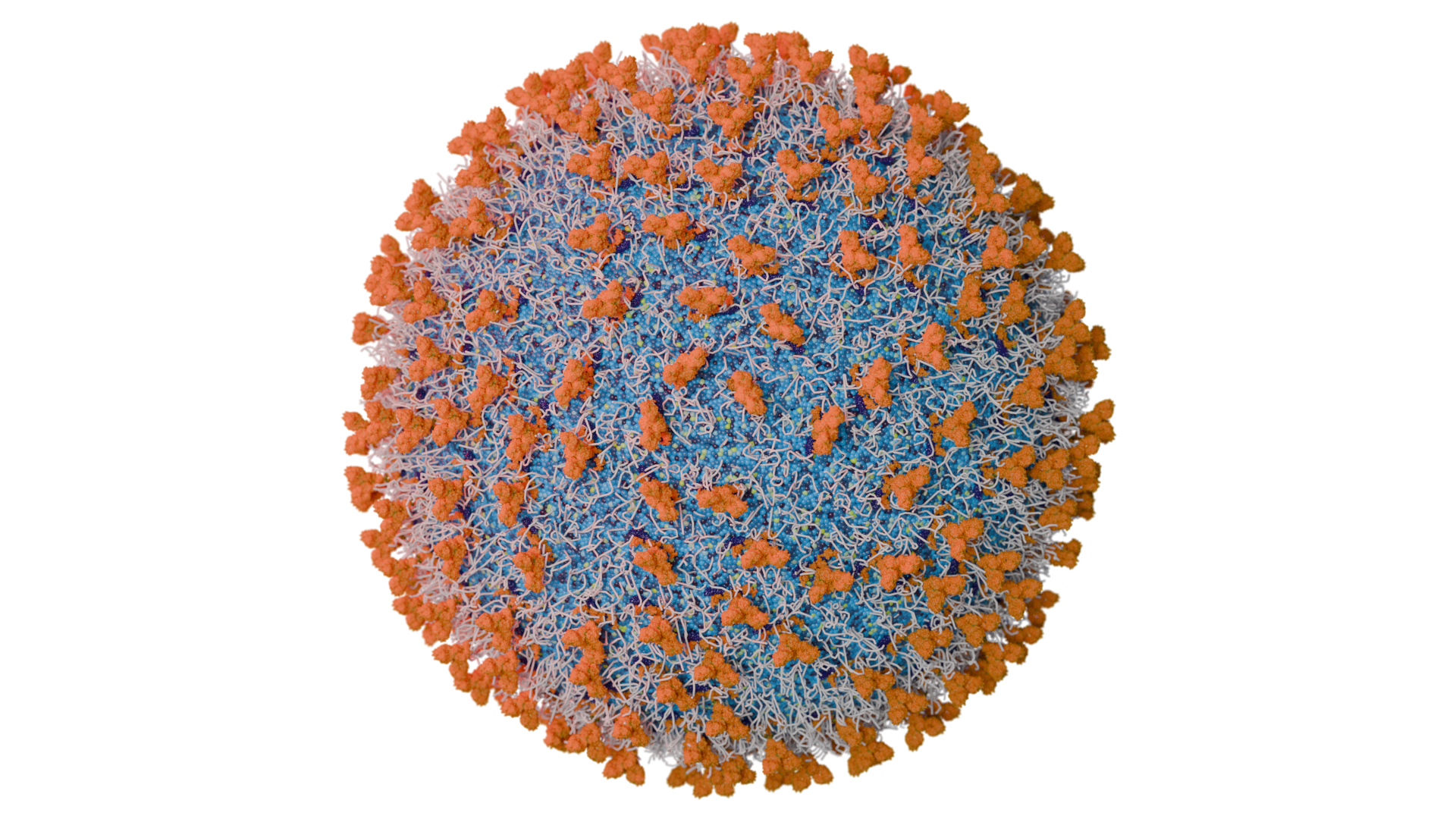
What are lipid nanoparticles?
Lipid nanoparticles (LNPs) are ~100 nm drug delivery vehicles made from a mixture of lipids that can package and protect nucleic acid therapies such as mRNA and DNA, and carry them into cells. They rose to global prominence as the delivery technology behind the COVID-19 mRNA vaccines, but their potential extends far beyond vaccines to gene therapy, cancer treatment, and personalised medicine.
Most LNPs inherently target the liver—not by design, but by default. The biology routes particles there unless something actively redirects them.
The liver accumulation problem

Despite their promise, LNPs have a critical limitation: when injected into the bloodstream, they are rapidly coated by a blood protein called Apolipoprotein E (ApoE). ApoE is recognised by LDL receptors on liver cells (hepatocytes), which express them in abundance. The result is that the vast majority of a systemically administered dose ends up in the liver regardless of where treatment is actually needed.
This hepatic tropism is why all currently approved LNP-based therapies target the liver. For diseases affecting cells elsewhere—T cells, lung cells, brain cells, or cancer cells—liver accumulation is a major barrier to both efficacy and safety. Read our introduction to lipid nanoparticles for a fuller exploration of these challenges.


NanoPilot
A membrane-anchored antibody platform that targets LNPs and blocks liver uptake
NanoPilot solves both problems at once. It is an engineered antibody-based fusion protein with two functional parts: one end carries an antibody that recognises and binds to the desired target cell, whilst the other end carries fragments of the LDL receptor that latch onto ApoE on the LNP surface. By occupying the ApoE binding sites, NanoPilot blocks the interaction that would normally route LNPs to the liver—simultaneously providing active targeting and active blocking.
NanoPilot is applied to pre-formulated LNPs in a simple two-step incubation taking approximately 10 minutes, with no special equipment or purification required. Its modular design means that the targeting antibody can be swapped out to redirect LNPs to different cell types, enabling rapid prototyping for a wide range of applications.
NanoPilot provides both active targeting and de-targeting, enabling highly-specific delivery to target cells.
Learn more about NanoPilot through our preprint on Biorxiv.
More of a visual learner? Try playing Hone Bio: The Game to learn more.
How It Works
Three simple steps to targeted LNPs
Formulate
LNPs are formulated with your nucleic acid payload using standard methods.
Add ApoE
ApoE is added to the LNPs and incubated for 5 minutes, mimicking the blood protein coating that forms naturally in vivo.
Add NanoPilot
NanoPilot is added and incubated for 5 minutes. Targeted LNPs are ready to use—no purification needed.
Preclinical Results
Evidence from our research programme
Reduced liver accumulation
In preclinical models, NanoPilot-coated LNPs showed significantly reduced liver uptake compared to uncoated LNPs.
Enhanced target cell specificity
Dramatically improved delivery to intended cells relative to off-target cells.
Validated in animal models
Successful cell-specific targeting, payload delivery, and liver de-targeting confirmed in vivo.
Human cell validation
NanoPilot increased delivery to target T cells and reduced off-target uptake when tested on primary human blood samples.
Rapid LNP coating
Simple two-step incubation in approximately 10 minutes, with no special equipment needed.
These are preclinical research results. NanoPilot has not been evaluated in clinical trials.
Applications
Targeted delivery to address therapeutic challenges
In Vivo CAR-T Cell Generation
CAR-T therapy is a powerful cancer treatment in which a patient’s T cells (immune cells) are reprogrammed to attack tumour cells. Currently this requires extracting cells from the patient, engineering them in the laboratory, and re-infusing them—a costly and time-consuming process. LNPs could enable reprogramming of T cells directly in the body by delivering the necessary mRNA instructions. NanoPilot’s demonstrated ability to target T cells (using antibodies against markers such as CD3 and CD8) makes this approach feasible.
Gene Therapy
Many gene therapy approaches use viral vectors for delivery, which can cause liver toxicity—including elevated liver enzymes in treated patients. Because NanoPilot actively blocks the natural pathway that sends LNPs to the liver, it offers a potentially safer non-viral delivery alternative that reduces liver accumulation whilst directing therapeutic payloads to the cells that need them.
Targeted Immunotherapy
Delivering therapies to the right immune cells is critical for next-generation vaccines, cancer immunotherapies, and autoimmune treatments. NanoPilot enables precise delivery to specific immune cell types—such as helper T cells, killer T cells, or other subsets—whilst sparing bystander cells, improving both the safety and effectiveness of treatment.
Because the targeting antibody in NanoPilot can be readily swapped out, new constructs can be tailor-made for different diseases by simply incorporating an antibody that recognises the relevant cell type.
If you are interested in using NanoPilot’s cell-specific targeting for your application, get in touch.
NanoPilot for Discovery
High-throughput antibody screening for targeted LNP development
Identifying the optimal antibody for targeted LNP delivery requires functional cell assays—antibody binding affinity alone cannot predict which candidates will achieve effective transfection. With conventional chemical conjugation taking hours per antibody, large-scale screening of candidate panels is impractical.
NanoPilot’s rapid coating changes this. Because NanoPilot can be added directly to pre-formulated LNPs, many candidates can be evaluated in parallel in a standard 96-well plate format—all in a single experiment.
Add NanoPilot directly to pre-formulated LNPs
Transfer NanoPilot-coated LNPs to target cells and incubate
Read fluorescent transfection signal by FACS or plate reader—bright wells are your hits
Combine with AI/ML or antibody libraries to identify the optimal antibody for a given target—or the optimal cell-surface target.
FAQs
Why is targeting LNPs important?
By targeting your LNP specifically to the target cell, more drug is delivered to its site of action for a given dose, leading to enhanced drug potency and reduced off-target toxicity.
How does NanoPilot bind to LNPs?
Part of the NanoPilot protein—specifically, fragments of the LDL receptor (the LA4–LA5 domains)—binds to ApoE proteins that coat the LNP surface. This anchoring mechanism simultaneously blocks the ApoE–LDL receptor interaction that normally sends LNPs to the liver. The coating is performed on pre-formulated LNPs in a simple two-step incubation taking approximately 10 minutes.
Why use NanoPilot instead of chemical conjugation to coat LNPs with antibodies?
Chemical methods for attaching antibodies to LNPs can take hours and often require purification afterwards. NanoPilot coating is a simple two-step, approximately 10-minute incubation with no purification needed. NanoPilot also actively blocks off-target delivery in addition to providing targeting—a combination that is unique to the technology.
Is NanoPilot compatible with all LNP formulations?
NanoPilot has been validated with multiple LNP formulations, including those using different helper lipids (such as DSPC and DOPE) and various PEG-lipid levels. Contact us to discuss compatibility with your specific formulation.
Can NanoPilot be tailored for different applications?
Yes. NanoPilot’s modular design makes it straightforward to swap in a different targeting antibody for each application. Any antibody that recognises a cell-surface marker can be incorporated to redirect LNPs to the desired cell type.
If you would like to explore the use of NanoPilot for your application, contact us to find out how we can help.
Can NanoPilot be licensed for research use?
Yes. Please get in touch via the contact form to discuss licensing.
Is NanoPilot available for therapeutic use?
Hone Bio's proprietary NanoPilot targeting technology is currently for research purposes only and has not been approved for clinical use or therapeutic applications by regulatory authorities.
Contact us
We want to hear from you
If you want to learn more about our technology, are interested in licensing, or have any other enquiries, contact us using the form linked below.
Click here to get in touch